

Start Selling with LaunchMyStore Today
Start your online business today and get everything you need to build, manage, and grow your online store.


Ecommerce Loyalty Programs That Actually Work in 2026
 Daniel Okonkwo
Start your online business today.
For free.
Start for freeEcommerce loyalty programs increase customer retention by up to 65% and boost customer lifetime value by 30–40%, according to Bond Brand Loyalty (2025). The most effective programs combine points, tiers, and experiential rewards to create emotional connections. This guide covers every loyalty program model, design principles, gamification tactics, and the tools you need to launch a program that turns one-time buyers into lifelong brand advocates.
- Acquiring a new customer costs 5-7 times more than retaining one, yet most brands spend 80% of budget on acquisition.
- Loyalty members show 30-40% higher lifetime value and spend 12-18% more per order than non-members.
- Make the first reward achievable in 1-2 purchases; needing 10 purchases makes 85% disengage before reaching it.
- The average loyalty program returns $12 in incremental revenue for every $1 spent on rewards, per Bond Brand Loyalty.
- Tiered programs generate 1.8 times more revenue per member than flat points programs via the endowed progress effect.
Why Loyalty Programs Are Essential for Ecommerce Growth
Acquiring a new customer costs 5–7 times more than retaining an existing one, according to Bain & Company (2025). Yet most ecommerce brands allocate 80% of their marketing budget to acquisition and only 20% to retention. This imbalance is a massive missed opportunity. Loyal customers spend 67% more than new customers, and increasing customer retention by just 5% can increase profits by 25–95%, per Harvard Business Review (2025).
Loyalty programs are the most effective retention tool available to ecommerce brands. According to Yotpo (2025), 73% of consumers say they are more likely to recommend brands with good loyalty programs, and 79% say loyalty programs make them more likely to continue buying from a brand. These are not marginal improvements — they represent fundamental shifts in customer behavior that compound over time into significant revenue growth.
The State of Ecommerce Loyalty in 2026
The loyalty program landscape has evolved dramatically. According to McKinsey (2025), 71% of consumers belong to at least one loyalty program, and the average consumer belongs to 4.7 programs. However, participation does not equal engagement: only 44% of loyalty program members actively use their programs. The difference between programs that thrive and those that languish comes down to design, value proposition, and emotional connection.
Modern loyalty programs have moved beyond simple “earn points, get discounts” models. The most successful programs in 2026 incorporate gamification, social rewards, experiential benefits, and personalized tiers that make customers feel genuinely valued — not just incentivized. Brands like Sephora (Beauty Insider), Nike (Nike Membership), and Starbucks (Starbucks Rewards) have set the standard, and ecommerce brands of all sizes can now replicate their strategies using accessible tools.
Key Retention Metrics That Matter
- Customer Retention Rate (CRR): The percentage of customers who make repeat purchases within a given period. Ecommerce average: 28%. With a loyalty program: 45–55%, per Smile.io (2025).
- Customer Lifetime Value (CLV): The total revenue a customer generates over their entire relationship with your brand. Loyalty program members have 30–40% higher CLV, according to LoyaltyLion (2025).
- Repeat Purchase Rate: The percentage of customers who make more than one purchase. Industry average: 27%. With loyalty programs: 40–50%, per Shopify (2025).
- Average Order Value (AOV): Loyalty members spend 12–18% more per order than non-members, according to Annex Cloud (2025).
- Redemption Rate: The percentage of earned rewards that are redeemed. Healthy programs maintain 60–80% redemption rates. Below 40% indicates poor program design.
Customer Retention Rate by Loyalty Program Type
Source: Smile.io & LoyaltyLion Industry Reports, 2025
Types of Ecommerce Loyalty Programs
Choosing the right loyalty program model is the most critical decision you will make. Each model appeals to different customer psychologies and works better for different product categories and price points. Here is a comprehensive breakdown of the five main models.
1. Points-Based Programs
The most common loyalty model: customers earn points for purchases and other actions, then redeem those points for discounts, free products, or other rewards. According to Colloquy (2025), 72% of loyalty programs use a points-based system. The appeal is simplicity — customers intuitively understand “spend more, earn more.”
Design your points currency with a clear value proposition. A common structure is 1 point per dollar spent, with 100 points equaling a $5 reward. This 5% return rate is attractive enough to motivate behavior without eroding margins. Offer bonus points for high-value actions: 200 points for writing a product review, 500 points for referring a friend, 100 points for signing up for the program. LaunchMyStore merchants can configure custom points rules through the built-in loyalty module, with automatic point calculations at checkout.
2. Tiered (VIP) Programs
Tiered programs create aspirational levels that encourage customers to spend more to unlock better benefits. Typical structures include three to five tiers: Bronze, Silver, Gold, Platinum, and Diamond (or creative branded equivalents). Each tier unlocks progressively better perks: higher points multipliers, free shipping, early access to sales, exclusive products, and dedicated support.
According to Accenture (2025), tiered programs generate 1.8 times more revenue per member than flat points programs. The psychological driver is the “endowed progress effect” — when customers see themselves progressing toward a goal, they are more motivated to continue. Make tier thresholds achievable: if your average customer spends $200/year, set your first tier at $150, second at $400, and top tier at $800.
3. Cashback Programs
Cashback programs reward customers with a percentage of their purchase amount as store credit. The simplicity is the strength: “Get 5% back on every purchase” is immediately understood. According to Wirecard (2025), cashback programs have the highest enrollment rate (82%) among all loyalty models because the value proposition requires zero calculation.
However, cashback programs can feel transactional rather than emotional. They work best for stores with high purchase frequency (groceries, supplements, pet supplies) where customers value predictable savings over aspirational rewards. Consider hybrid models that combine cashback with tier-based bonuses to add an emotional dimension.
4. Referral Programs
Referral programs turn loyal customers into brand ambassadors by rewarding them for bringing new customers. The dual-sided incentive (reward for referrer and discount for the new customer) creates a powerful growth loop. According to Nielsen (2025), 92% of consumers trust recommendations from friends over any other form of advertising, making referrals the highest-converting acquisition channel available.
The most effective referral structures offer meaningful rewards on both sides: “Give $20, Get $20” or “Give 15% off, earn $15 in store credit.” Track referral metrics carefully: cost per acquired customer via referrals is typically 60–70% lower than paid advertising, per ReferralCandy (2025).
5. Paid (Premium) Membership Programs
Paid loyalty programs charge an upfront fee for access to premium benefits. Amazon Prime is the gold standard, with 200 million members paying $139/year for free shipping, streaming, and exclusive deals. According to McKinsey (2025), members of paid loyalty programs are 60% more likely to spend more with the brand after joining, compared to 30% for free programs. The upfront commitment creates a psychological investment that drives higher engagement.
For ecommerce brands, a paid membership might offer free unlimited shipping, member-only pricing (10–15% off all orders), early access to new products, and exclusive content. Price it so that a customer who makes just 2–3 purchases per year breaks even, ensuring the perceived value always exceeds the cost.
Pro Tip: Do not limit yourself to one model. The most effective ecommerce loyalty programs combine elements from multiple models. A points-based system with VIP tiers and a referral bonus creates multiple engagement hooks that appeal to different customer motivations. LaunchMyStore’s loyalty tools support hybrid configurations out of the box.
Designing a Loyalty Program That Drives Results
Program design determines whether your loyalty program becomes a profit center or a cost center. The difference lies in the details: reward structure, earn-to-burn ratio, communication cadence, and program branding.
Setting the Right Earn-to-Burn Ratio
The earn-to-burn ratio is the relationship between how quickly customers earn rewards and how quickly they can redeem them. Set it too stingy, and customers lose interest. Set it too generous, and you erode margins. The sweet spot for most ecommerce businesses is a 3–7% effective discount rate, meaning customers earn rewards worth 3–7% of their spending, according to Smile.io (2025).
Ensure the first reward is achievable within 1–2 purchases. If a customer needs to make 10 purchases before earning their first reward, 85% will disengage before reaching that threshold, per LoyaltyLion (2025). Quick wins create momentum that keeps customers engaged through the long term.
Gamification Elements That Work
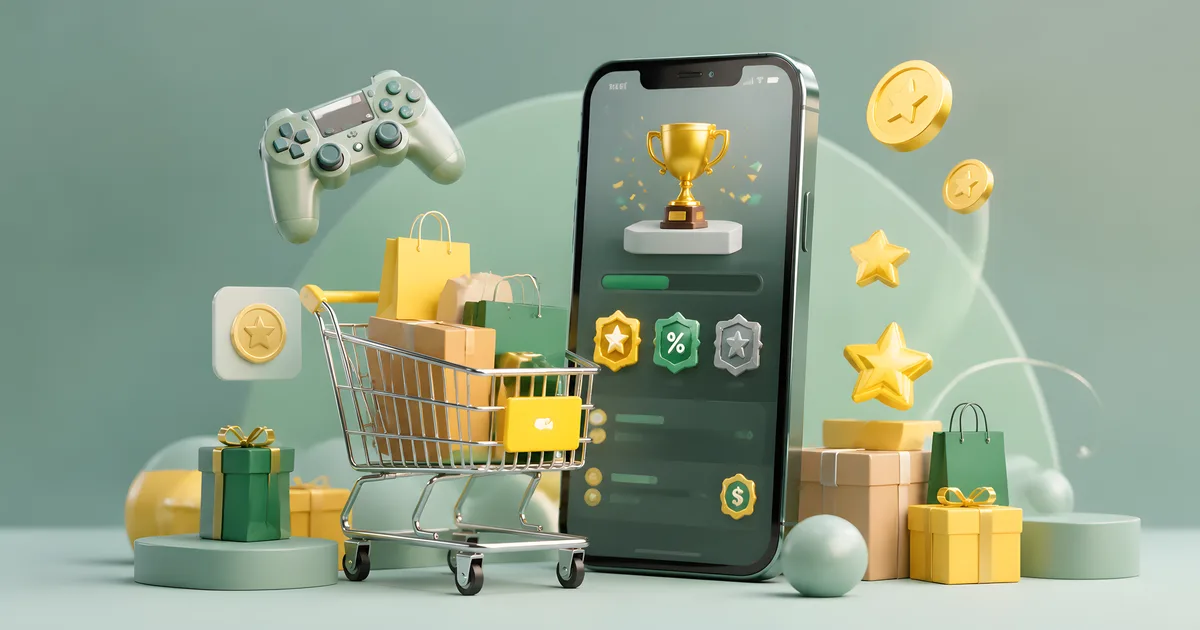
Gamification transforms a transactional loyalty program into an engaging experience. The most effective gamification elements for ecommerce include progress bars showing how close a customer is to the next reward, streak bonuses for consecutive monthly purchases, surprise-and-delight random bonus points, birthday rewards and anniversary milestones, achievement badges for specific actions (first review, 10th purchase, social share), and spin-the-wheel promotions for bonus rewards.
According to Gamify (2025), loyalty programs with gamification elements see 47% higher engagement and 22% more repeat purchases compared to non-gamified programs. The key is making gamification feel fun and rewarding, not gimmicky or manipulative.
Loyalty Program Platforms: A Comparison
Choosing the right technology platform is essential for launching and managing your loyalty program. Here is how the leading options compare in 2026.
| Platform | Starting Price | Best For | Key Features | Ecommerce Integrations |
|---|---|---|---|---|
| LaunchMyStore Loyalty | Included in plan | All-in-one solution | Points, tiers, referrals, gamification, analytics | Native |
| Smile.io | $49/mo | Small to mid-size stores | Points, VIP, referrals | Shopify, BigCommerce, Wix |
| LoyaltyLion | $199/mo | Mid-market brands | Points, tiers, custom rewards, analytics | Shopify, Magento, BigCommerce |
| Yotpo Loyalty | $199/mo | Brands wanting reviews + loyalty | Points, tiers, referrals, reviews integration | Shopify, BigCommerce |
| Annex Cloud | Custom pricing | Enterprise | Full suite: points, tiers, referrals, advocacy | Custom integrations |
| Zinrelo | Custom pricing | Data-driven brands | Multi-dimensional loyalty, AI optimization | Shopify, Magento, custom |
Sources: Platform websites and G2 Reviews, 2025
Measuring Loyalty Program ROI
A loyalty program is an investment, and like any investment, it must deliver measurable returns. The key is tracking both direct revenue metrics and behavioral metrics that indicate long-term program health.
Points buy repeat purchases, but they do not buy attachment. The brands with the highest retention pair a rewards programme with genuine belonging — our guide to building a loyal customer community covers the channels and rituals that turn buyers into advocates.
Direct Revenue Metrics
Calculate your loyalty program ROI by comparing the incremental revenue generated by program members against program costs (platform fees, reward costs, marketing spend). According to Bond Brand Loyalty (2025), the average loyalty program delivers $12 in incremental revenue for every $1 spent on rewards. However, this varies significantly by industry: fashion and beauty see ratios of 15:1, while electronics typically see 8:1.
Behavioral Metrics
Track the behavioral shifts that indicate program effectiveness: increase in purchase frequency (target 20–30% improvement), increase in average order value (target 10–15%), decrease in churn rate (target 25–40% reduction), increase in referral rate, and increase in customer engagement (email opens, site visits, social interactions). These metrics paint a complete picture of how your loyalty program is changing customer behavior over time.
Common Pitfalls to Avoid
- Making rewards too hard to earn: If the first reward takes more than 2 purchases to achieve, engagement drops precipitously.
- Ignoring program communication: Members who do not receive regular updates about their points balance and available rewards are 3 times more likely to become inactive, per Smile.io (2025).
- Offering only discount rewards: Discounts erode margins and train customers to wait for sales. Include experiential rewards (early access, exclusive content, VIP events) that cost you less but feel more valuable.
- Not segmenting program communications: A new member and a VIP member should receive very different messaging. Personalize based on tier, purchase history, and engagement level.
- Failing to sunset inactive members: Members who have not engaged in 12+ months should receive a win-back campaign or be gently removed to keep your metrics accurate.
Pro Tip: Run an A/B test before launching your full program. Offer the loyalty program to 50% of new customers and withhold it from the other 50% for 90 days. Compare retention rates, CLV, and repeat purchase rates between the two groups. This gives you concrete ROI data to justify ongoing investment in the program.
Frequently Asked Questions
How much does it cost to run an ecommerce loyalty program?
Costs vary widely depending on program complexity and platform. LaunchMyStore includes loyalty features in its standard plans at no additional cost. Third-party platforms like Smile.io start at $49/month, while enterprise solutions like LoyaltyLion and Annex Cloud range from $199–$1,000+/month. Beyond platform fees, budget 3–7% of revenue for reward costs. Most programs achieve positive ROI within 6–9 months of launch.
What type of loyalty program works best for small ecommerce stores?
Small stores with fewer than 5,000 customers should start with a simple points-based program combined with a referral component. This combination provides immediate retention value (points) and acquisition value (referrals) without the complexity of tiered systems. As your customer base grows beyond 10,000, consider adding VIP tiers to reward your most valuable customers.
How do I promote my loyalty program to get sign-ups?
The most effective promotion channels include a dedicated loyalty page on your website, a sign-up prompt during checkout, email campaigns to existing customers, a pop-up for first-time visitors offering bonus points for joining, social media announcements, and in-package inserts with QR codes linking to the sign-up page. According to Smile.io (2025), stores that promote their loyalty program at checkout see 4 times more enrollments than those relying on a standalone landing page.
Should I offer free shipping as a loyalty reward?
Free shipping is consistently the most desired loyalty reward, with 79% of consumers ranking it as their top preference, according to NRF (2025). If your margins allow it, include free shipping as a tier-based benefit (e.g., Gold members get free standard shipping on all orders). If margins are tight, offer free shipping as a redeemable reward that costs a specific number of points, giving you more control over the cost.
How long does it take to see results from a loyalty program?
Most ecommerce loyalty programs begin showing measurable results within 3–6 months. Initial metrics to watch include enrollment rate (target 15–25% of customers), engagement rate (target 40–50% of members earning or redeeming points), and repeat purchase rate improvement. Significant CLV improvements typically emerge at the 9–12 month mark as loyalty behaviors compound over time.
Can I run a loyalty program alongside regular discounts and sales?
Yes, but be strategic about the interaction. Loyalty points should stack with regular promotions (members earn points on discounted purchases), but avoid offering additional loyalty discounts during major sales events, as this double-dipping erodes margins. Instead, offer loyalty members early access to sales (24–48 hours before the public) — this creates urgency, drives higher conversion, and makes members feel exclusive without costing you extra.
Conclusion: Build a Loyalty Program That Creates Lifelong Customers
In an era where customer acquisition costs continue to rise — up 60% over the past five years according to Profitwell (2025) — loyalty programs are no longer optional for ecommerce brands that want sustainable growth. The data is clear: loyalty programs increase retention, boost lifetime value, reduce acquisition costs through referrals, and create emotional connections that insulate your brand against price competition.
The best loyalty programs are those that feel like a genuine relationship, not a transaction. Combine points with tiers, add gamification elements that make earning fun, offer experiential rewards that money cannot buy, and communicate with members as valued individuals. Start simple, measure everything, and iterate based on data.
Whether you are launching your first loyalty program or optimizing an existing one, the principles remain the same: make it easy to join, quick to earn the first reward, emotionally engaging to participate in, and genuinely valuable to your best customers. With platforms like LaunchMyStore offering built-in loyalty tools, there has never been a lower barrier to creating a world-class customer rewards experience.
Written by
Daniel Okonkwo
Customer Retention Strategist at LaunchMyStore. Helping online businesses scale with data-driven strategies and the latest ecommerce best practices.
 Keep Reading