

Start Selling with LaunchMyStore Today
Start your online business today and get everything you need to build, manage, and grow your online store.


Live Shopping for Ecommerce: How to Host Streams That Sell
 Tyler Kim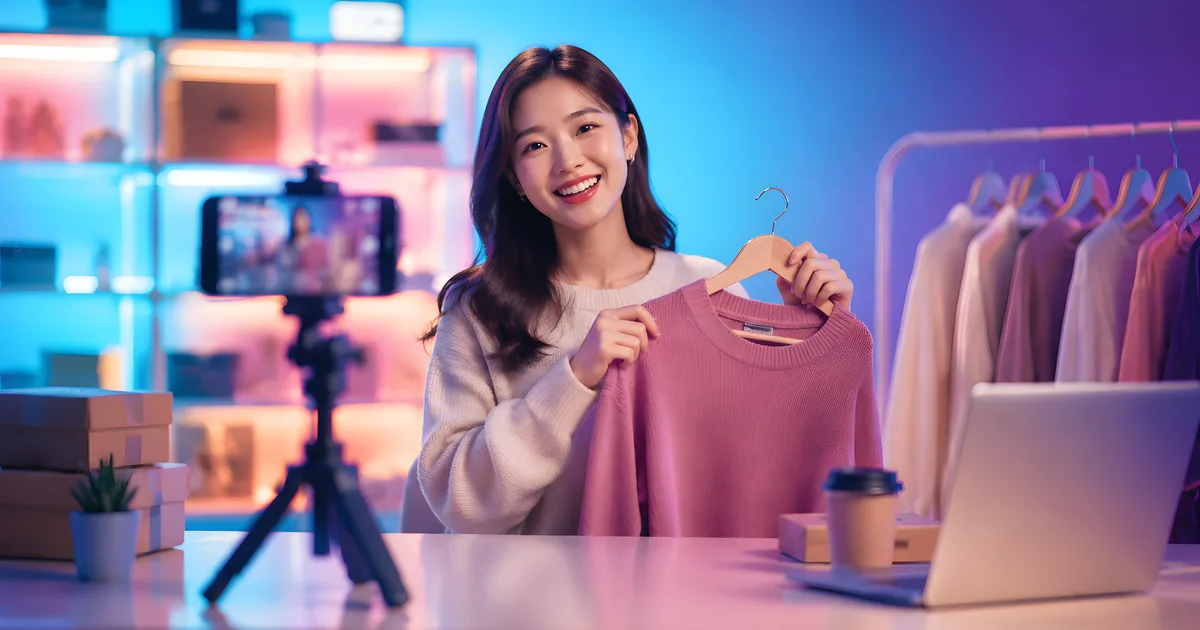
Start your online business today.
For free.
Start for freeLive shopping is projected to reach $68 billion in the US by 2026, according to Coresight Research (2025). Live streams convert at 10–20 times higher rates than traditional ecommerce, with average engagement rates of 30–50%. This guide covers platform selection, equipment setup, content planning, flash deal strategies, and analytics — everything you need to launch profitable live selling on TikTok, Instagram, YouTube, and your own LaunchMyStore site.
- US live commerce is projected to reach $68 billion in 2026, up 240% from $20 billion in 2023, per Coresight.
- Live streams convert at 10-30% versus 2-4% for traditional product pages, and 67% of live purchases are unplanned.
- Hook viewers in the first 30 seconds, since 50% decide whether to stay that quickly, per TikTok (2025).
- Countdown flash deals lasting 3-5 minutes convert at 25-40% by combining limited time and limited quantity.
- On-site live shopping converts at 15-30% with zero platform commissions, higher than social-platform streams.
What Is Live Shopping and Why Is It Exploding?
Live shopping — also called live commerce, live selling, or live stream shopping — combines real-time video broadcasting with integrated purchasing functionality. Viewers watch a host demonstrate products, ask questions via live chat, and purchase items with a single click without leaving the stream. It is the digital evolution of QVC and HSN, reinvented for the social media generation.
In China, live commerce already accounts for 20% of total ecommerce revenue, generating $514 billion in 2025, according to McKinsey (2025). The US market has been growing rapidly: from $20 billion in 2023 to a projected $68 billion in 2026, per Coresight Research (2025). This 240% growth in three years makes live shopping the fastest-growing ecommerce channel globally.
The conversion rates are staggering. Traditional ecommerce product pages convert at 2–4%, while live shopping streams convert at 10–30%, according to Bambuser (2025). The combination of real-time product demonstration, social proof from other viewers, time-limited offers, and direct host interaction creates a purchasing urgency that static product pages cannot replicate.
Who Is Buying Through Live Streams?
Live shopping is not limited to Gen Z. According to TikTok (2025), 42% of live shopping buyers in the US are aged 25–44, and 23% are over 45. The fastest-growing segments are beauty, fashion, home goods, electronics, and food & beverage. Impulse purchases dominate — 67% of live shopping purchases are unplanned, compared to 40% for traditional ecommerce, per Morning Consult (2025).
Choosing the Right Live Shopping Platform
Each live shopping platform offers different audience demographics, features, and monetization options. Your choice should align with where your target customers already spend time and which platform best supports your product category.
TikTok Live Shopping
TikTok Shop has emerged as the dominant live commerce platform in the West, with over 200 million active shoppers globally as of 2025, according to TikTok (2025). TikTok Live Shopping integrates product pins directly into the live stream, allowing viewers to add items to their cart without leaving the video. The platform’s algorithm actively promotes live streams to relevant audiences, providing organic reach that other platforms cannot match.
- Audience: Predominantly 18–34, but growing rapidly among 35–54 age group.
- Best categories: Beauty, fashion, accessories, gadgets, food, and home decor.
- Key features: Product pins, live cart, TikTok Shop integration, affiliate creator network, real-time analytics.
- Commission: 5% platform fee on sales (as of 2026), which TikTok has announced will increase to 8% later in the year.
Instagram Live Shopping
Instagram Live allows product tagging during live broadcasts, enabling viewers to tap on featured products and purchase within the app. With 2 billion monthly active users, Instagram provides massive reach for visual product categories. According to Meta (2025), Instagram Live Shopping conversions are 3.5 times higher than feed posts and 2 times higher than Stories when products are tagged.
Amazon Live
Amazon Live combines the world’s largest ecommerce marketplace with live video. Streams appear on product detail pages, the Amazon Live homepage, and in app notifications to followers. According to Amazon (2025), products featured on Amazon Live see an average 35% increase in sales during and immediately after the stream. The platform is especially powerful for Amazon sellers who want to differentiate from competitors on the same product page.
YouTube Shopping
YouTube Shopping allows creators to tag products from their own stores or partner brands during live streams and regular videos. With 2.7 billion monthly users and the longest average watch time of any video platform, YouTube is ideal for detailed product demonstrations and educational selling. According to Google (2025), YouTube Shopping live streams generate 4 times more product page visits than standard video content.
US Live Commerce Market Growth (Billions USD)
Source: Coresight Research & McKinsey, 2025
| Platform | Monthly Active Users | Avg. Conversion Rate | Commission Fee | Best Product Categories | Key Advantage |
|---|---|---|---|---|---|
| TikTok Live | 1.5B+ | 10–15% | 5–8% | Beauty, fashion, gadgets | Organic algorithmic reach |
| Instagram Live | 2B+ | 8–12% | 0% (Meta Shops) | Fashion, lifestyle, beauty | Visual storytelling & brand building |
| Amazon Live | 300M+ shoppers | 12–20% | Varies by category | Electronics, home, beauty | High purchase intent audience |
| YouTube Shopping | 2.7B+ | 6–10% | 0% | Tech, education, fitness | Long-form content & SEO value |
| Own Website | Your traffic | 15–30% | 0% | All categories | Full brand control & data ownership |
Setting Up Your Live Shopping Studio
You do not need a professional television studio to launch live shopping — but you do need more than a smartphone propped against a coffee mug. According to Bambuser (2025), production quality is the third most important factor in live shopping success, after host personality and product relevance. A consistent, well-lit, well-framed setup signals professionalism and builds viewer trust.
Essential Equipment
- Camera: A recent smartphone (iPhone 14+ or Samsung Galaxy S23+) is sufficient for most live streams. For higher production value, a mirrorless camera like the Sony ZV-E10 ($700) or Canon M50 Mark II ($600) with a capture card provides superior image quality.
- Lighting: Two softbox lights or a ring light eliminate shadows and create a flattering look. A basic two-light kit costs $80–$150. Position lights at 45-degree angles to the host for even illumination.
- Microphone: Audio quality is more important than video quality for viewer retention, per YouTube Creator Academy (2025). A Rode Wireless Go II ($200) or Blue Yeti ($100) provides clear audio with minimal background noise.
- Backdrop: A clean, branded backdrop creates visual consistency. Options range from a $30 paper backdrop to a $200 collapsible green screen. Product display shelves work well for demonstrating multiple items.
- Tripod or mount: A stable camera prevents shaky footage. A flexible tripod ($25–$50) with a phone or camera mount works for most setups.
- Internet connection: A minimum 10 Mbps upload speed is required for HD streaming. Use a wired Ethernet connection whenever possible — Wi-Fi introduces latency and reliability risks.
Software and Streaming Tools
For multi-platform streaming, tools like StreamYard ($20/month), Restream ($16/month), and OBS Studio (free) allow you to broadcast simultaneously to TikTok, Instagram, YouTube, and your own website. For on-site live shopping on your LaunchMyStore, tools like Livescale, Bambuser, and CommentSold provide embedded live video with integrated product cards and checkout.
Content Planning: What to Show and When
Successful live shopping is not improvised — it follows a planned content structure that balances entertainment, education, and urgency. According to Whatnot (2025), streams with a structured run-of-show generate 2.3 times more revenue than unstructured streams of the same duration.
The Optimal Live Stream Structure
- Hook (0–2 minutes): Open with an exciting announcement, a flash deal teaser, or a product reveal to capture attention immediately. According to TikTok (2025), 50% of viewers decide whether to stay within the first 30 seconds.
- Welcome & overview (2–5 minutes): Greet viewers by name as they join, explain what products you will feature, and preview any exclusive deals available only during the stream.
- Product showcases (5–40 minutes): Demonstrate each product for 5–8 minutes. Show it in use, explain features and benefits, answer live questions, and share pricing with a clear call to action.
- Flash deal drops (throughout): Every 10–15 minutes, announce a limited-time offer (valid for 3–5 minutes) to create urgency spikes. According to Whatnot (2025), flash deals during live streams convert at 25–40%.
- Q&A and engagement (last 10 minutes): Answer remaining questions, recap the best deals, and remind viewers of any bundle offers. End with a countdown for any remaining flash deals.
Pro Tip: Schedule your live streams at consistent times (e.g., every Tuesday and Thursday at 7 PM) to build habitual viewership. According to Instagram (2025), creators who stream on a consistent schedule grow their live audience 4 times faster than those who stream sporadically. Promote your schedule across all social channels and email at least 24 hours in advance.
Engagement Tactics That Drive Sales
Live shopping success depends on engagement — the more viewers participate, the more they buy. According to Bambuser (2025), streams with engagement rates above 30% (comments and reactions relative to viewers) convert at 3 times the rate of streams with engagement below 10%.
Real-Time Interaction Strategies
- Name calling: Greet viewers by name as they join and when they comment. This personal acknowledgment increases average viewing time by 40%, per TikTok Creator insights (2025).
- Polls and questions: Ask viewers which product they want to see next, which color they prefer, or what problem they need solved. Interactive polls increase engagement rates by 55%, according to Instagram (2025).
- Comment-triggered deals: Ask viewers to type a keyword (e.g., “DEAL”) to unlock a special price. This gamification tactic increases comment volume by 200–300% and creates visible social proof for new viewers joining the stream.
- Giveaways: Run giveaways at the 15-minute and 30-minute marks to incentivize viewers to stay. According to Whatnot (2025), streams with giveaways have 65% longer average watch times.
- User-generated content: Feature customer photos, reviews, or videos during the stream to build social proof. Viewers who see real customer testimonials are 2.4 times more likely to purchase, per Bazaarvoice (2025).
Flash Deals and Urgency: The Revenue Engine
Flash deals during live streams are the primary revenue driver. The combination of limited time, limited quantity, and live social proof creates urgency that static web pages cannot replicate. According to McKinsey (2025), live shopping flash deals convert at 5–10 times the rate of traditional flash sales on ecommerce sites.
Types of Live Stream Flash Deals
- Countdown deals: A product available at a special price for 3–5 minutes, with a visible countdown timer. These create the highest urgency and convert at 25–40%, per Bambuser (2025).
- Limited-quantity drops: “Only 50 units at this price” triggers scarcity. As the quantity decreases, purchasing accelerates. Display the remaining quantity in real time.
- Bundle-only pricing: Offer a bundle price that is only available during the live stream, unavailable on the regular product page. This exclusivity incentivizes live viewership and repeat attendance.
- Viewer milestone deals: Unlock a deal when the stream reaches a viewer count milestone (e.g., “When we hit 500 viewers, I’ll drop this product at 50% off”). This incentivizes viewers to share the stream.
Measuring Live Shopping Performance
Without measurement, you cannot optimize. Track these KPIs for every live shopping session to identify what works and iterate on your approach.
- Peak concurrent viewers: The maximum number of simultaneous viewers. This measures your promotion effectiveness and timing.
- Average watch time: How long viewers stay in the stream. Above 5 minutes is good; above 10 minutes is excellent, per Bambuser (2025).
- Engagement rate: Comments and reactions divided by total viewers. Above 15% is average; above 30% is high-performing.
- Conversion rate: Purchases divided by unique viewers. 5–10% is average for live shopping; above 15% is excellent.
- Revenue per viewer: Total revenue divided by unique viewers. This normalizes performance across streams of different sizes.
- Average order value: Track whether live stream orders are higher or lower than your site-wide AOV.
- Return rate: Monitor whether live-purchased products have different return rates than standard purchases.
Hosting Live Shopping on Your Own Website
While social platforms offer built-in audiences, hosting live shopping on your own LaunchMyStore website gives you full control over the experience, customer data, and margins (zero platform commissions). Tools like Livescale, Bambuser, and GhostRetail embed a live video player directly into your product pages with integrated add-to-cart functionality.
According to Bambuser (2025), on-site live shopping converts at 15–30% — significantly higher than social platform streams — because viewers have already navigated to your store and have higher purchase intent. The trade-off is smaller initial audiences, which you must build through email marketing, social promotion, and paid advertising.
Frequently Asked Questions
How long should a live shopping stream last?
The optimal duration is 30–60 minutes. According to TikTok (2025), streams shorter than 20 minutes do not build enough momentum for flash deal conversions, while streams longer than 90 minutes see declining engagement. Start with 30-minute streams and extend as you build a regular audience.
Do I need a large following to succeed with live shopping?
No. According to Whatnot (2025), sellers with fewer than 1,000 followers can generate $1,000–$5,000 per stream if they have strong products and engaging presentation. The algorithm on platforms like TikTok actively promotes live streams to new audiences based on engagement signals, not follower count.
What products sell best through live shopping?
Visual products that benefit from demonstration perform best: beauty, fashion, home decor, electronics, collectibles, and food. According to Coresight Research (2025), beauty and fashion account for 35% and 28% of live shopping revenue respectively. Products that require explanation, have a visual transformation, or create an emotional response are ideal.
How do I handle returns from live shopping purchases?
Offer the same return policy as your regular store. According to Narvar (2025), live shopping return rates average 10–15%, lower than general ecommerce returns (20–30%), because the live demonstration reduces uncertainty. Clearly state your return policy during the stream to build trust.
Can I go live on multiple platforms simultaneously?
Yes. Multi-streaming tools like StreamYard and Restream allow you to broadcast to TikTok, Instagram, YouTube, and your own site simultaneously. However, managing chat interactions across multiple platforms requires a moderator or assistant. Start with one platform, master it, then expand.
What time should I schedule my live streams?
According to TikTok (2025), the highest-converting times for live shopping in the US are weekday evenings (6–9 PM local time) and weekend afternoons (1–4 PM). Check your analytics for when your specific audience is most active and test different time slots over 4–6 weeks to find your optimal schedule.
Conclusion: Get Started With Live Shopping Today
Live shopping is not a future trend — it is a present-day revenue channel generating $68 billion in the US market in 2026. The barriers to entry are low: a smartphone, decent lighting, and engaging products are enough to start. The conversion rates (10–30%) dwarf traditional ecommerce (2–4%), and the interactive format builds customer relationships that static product pages cannot.
Start with the platform where your audience already exists. If you are strong on TikTok, begin with TikTok Live Shopping. If you have an established Instagram following, use Instagram Live with product tags. Set up a basic studio, plan your first stream using the content structure in this guide, and commit to streaming at least twice per week for one month.
The merchants who embrace live commerce now will build audiences, refine their presentation skills, and capture market share before the channel becomes saturated. According to McKinsey (2025), live commerce is following the same adoption curve as social media marketing did in 2012–2015 — early movers who invested during the growth phase captured disproportionate long-term value. For LaunchMyStore merchants, the time to start live selling is today.
Written by
Tyler Kim
Live Commerce Strategist at LaunchMyStore. Helping online businesses scale with data-driven strategies and the latest ecommerce best practices.
 Keep Reading